
The new standard for OR intelligence
Real-time OR monitoring, scheduling, and predictive analytics that detects, communicates, and forecasts OR activity — down to the minute
Get in touch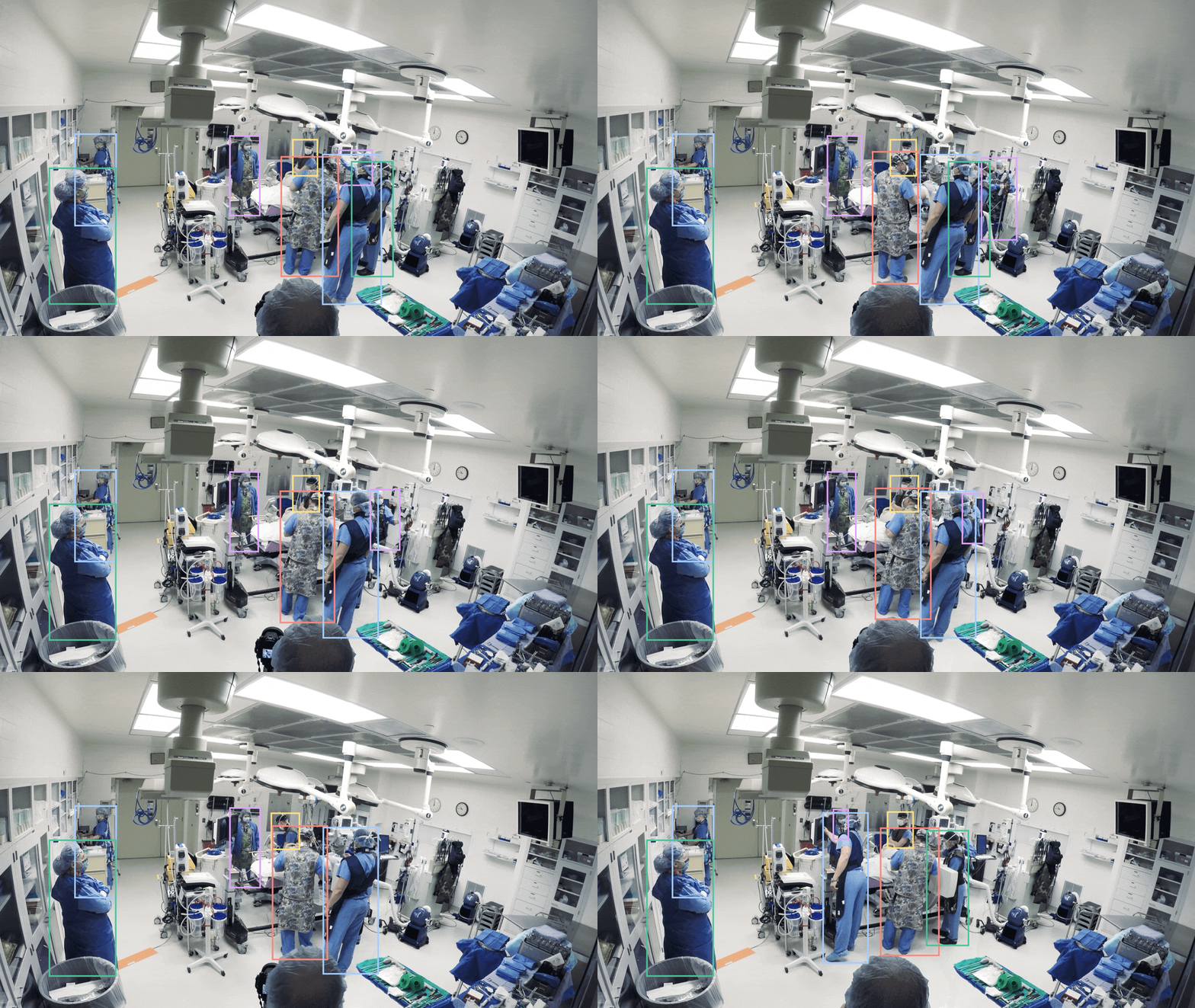
Apella combines computer vision, artificial intelligence, and EHR data to eliminate the delays, distractions, and inefficiencies that prevent ORs from running smoothly.
How Apella works

Apella uses ambient AI and computer vision to automatically capture and autonomously write back to the EHR a detailed timeline of up to 14 case events that go far beyond wheels-in to wheels-out.
- New and actionable event detection
- Real-time documentation to the EHR
- Room occupancy graphing
- Patient privacy blurring

Real-time data is shared across your perioperative staff so they can track the day’s events and know where they need to be to keep cases on schedule.
- Live video monitoring
- Real-time schedule view
- Pre-op, Post-op, and Turnover views
- Automated SMS notifications to clinicians

Using predictive AI models, Apella combines observed data with EHR data to forecast same-day delays, staffing needs, and accurate case scheduling.
- Real-time delay predictions
- Staffing optimization
- Case duration lookup
- Schedule optimization tools

Data is shared back to you as actionable insights to uncover bottlenecks and best practices that enable continuous improvement.
- On-demand metrics
- OR efficiency trends
- Historical video review

OR efficiency is only as good as the data behind it
The problems with manual data capture

Missing context
Misses key events or detects them long after they've impacted the day.
Overburdened staff
Manual OR event tracking strains staff and distracts from care.
Not actionable
Does not capture the full picture to identify where action is needed.
Apella bridges this gap

Uncover blindspots
Auto-captures and writes back granular event data to the EHR in real time.
Automates workflows
Eliminates routine tasks so staff can operate at the top of their license.
Data-driven action
Predicts and alerts you to delays before they happen, not hours later.
Drive critical workflows
to improve OR performance
Power your most important OR efficiency initiatives with Apella

Prevent OR delays

Automate event documentation

Improve turnovers

Optimize scheduling

Streamline coordination

Uncover efficiency insights
Support your
entire surgical team
Automate operations so staff can focus on what they do best.

OR Leaders

Charge Nurses

Physicians

Pre-Op and Post-Op

Schedulers

Turnover Staff
Frequently asked questions
Apella’s computer vision models analyze live video from ceiling-mounted cameras to autonomously detect and timestamp 14 key events across surgical cases and turnovers — ranging from basic patient entrance and exit to more granular events EHRs typically do not capture, including draping, cleaning start, and room setup start — grouping events into distinct and relevant case phases, and can write back to the EHR, including Epic, reducing manual documentation for staff.
Yes. Apella works alongside the EHR, including Epic and Oracle Health - Cerner, enriching documented information with objective OR data captured through computer vision. By integrating ground-truth events with EHR records, Apella’s predictive models generate more accurate forecasts and a trusted, end-to-end view of the schedule. Key events can be written by Apella back to Epic, improving operational data accuracy without adding staff overhead or documentation.
Apella's computer vision detects perioperative events in seconds, capturing wheels-in an average of 11x faster than the EHR, which can take up to 19 minutes, and wheels-out an average of 14x faster than the EHR, which can take up to 20 minutes. Using Apella, hospitals have improved case duration accuracy by 40%, with mean error falling from 57.4 to 34.2 minutes. Apella’s schedule forecasts are 24% more accurate than the EHR.
Yes. Apella's ambient AI was evaluated in an independent, peer-reviewed study published in BMJ Health & Care Informatics, where F1 scores for detected perioperative events exceeded 0.98 — a level of accuracy, precision, and recall the study characterized as "decision-grade," meaning it's reliable enough to drive real-time operational decisions rather than just supplement them.
Unlike tools like LeanTaaS iQueue and Qventus, Apella uses computer vision to capture ground-truth observations directly from the OR instead of relying exclusively on manually-entered, hard-to-trust EHR data. Apella’s platform brings together tools for day-of coordination, scheduling, and performance analytics in a single, connected system, all powered by the same trusted data foundation.
Apella is purpose-built for OR and procedural operations — unlike Artisight's hospital-wide smart room platform, Proximie's surgical telepresence and video tools, or Aimbient's origins in OR Black Box–style retrospective safety recording. Apella predicts case duration in real time and can automatically write up to 14 event timestamps back to Epic, validated with a 98% F1 score across 500,000+ cases. Only Apella has independently validated its impact with a 7% increase in surgical case volume according to a peer-reviewed study by Houston Methodist published in the Journal of Imaging.
Yes. Beyond operating rooms, Apella's technology can also be used in other anesthesia rooms like interventional radiology, cardiology, and endoscopy. Its models can be trained on data from a broad range of procedure types specific to a partner health system’s objectives.