Prevent OR delays.
Reduce overtime.
Learn how Houston Methodist uses Apella to predict
which rooms will run late and keep the day on schedule.
Empower teams to make
smarter real-time decisions
Without better data and real-time visibility, schedules derail before you even see the problem. Apella uses ambient intelligence and predictive AI to help OR staff make faster and smarter decisions throughout the day.
Prevent delays
and bottlenecks
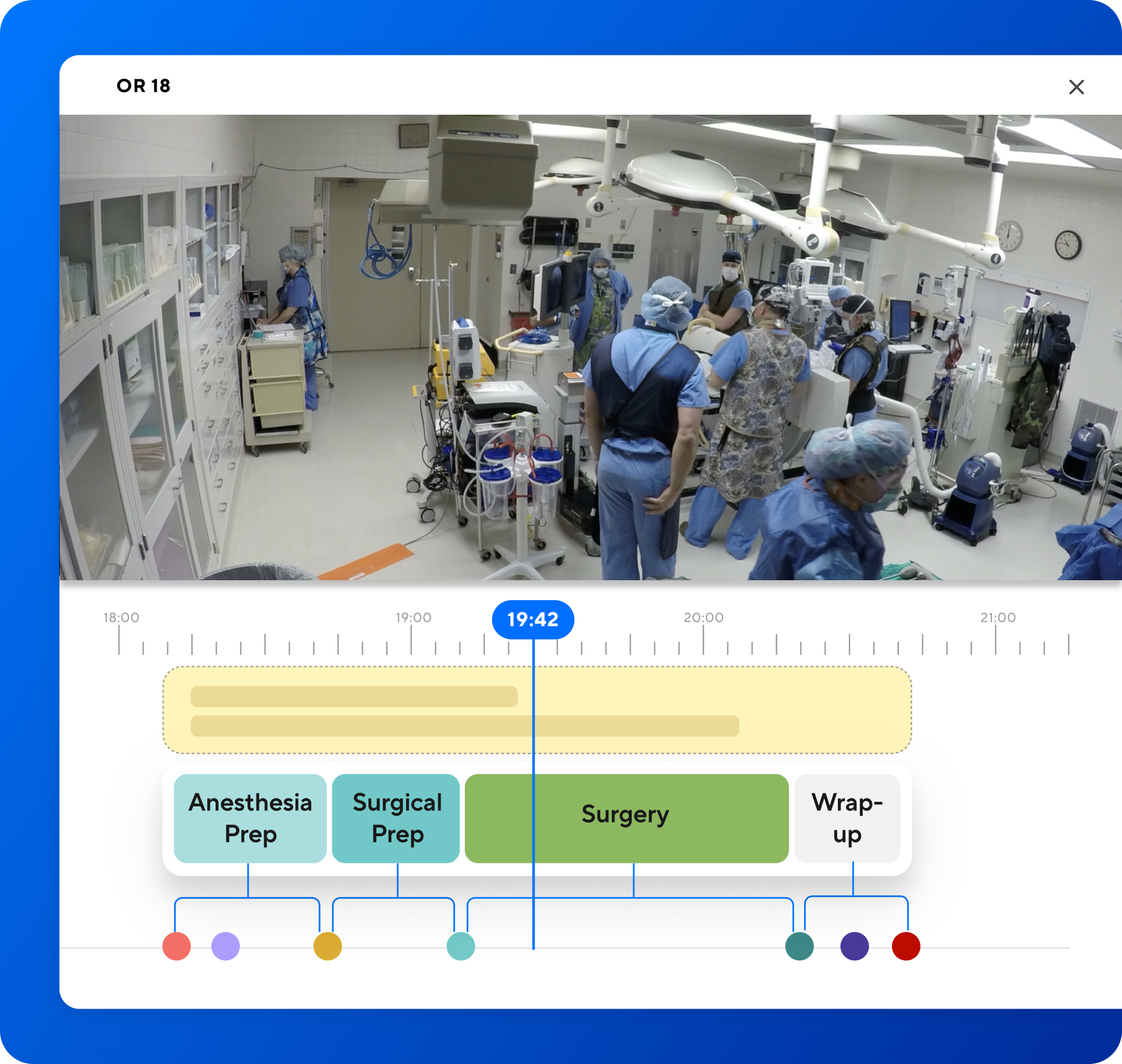
Know exactly when and where to step in to keep the schedule from slipping. Apella alerts you the moment a case or turnover goes off track.
- Real-time delay alerts for cases and turnovers
- Dynamic case length modeling
- Late room predictions


Eliminate manual
back-and-forth
No more interrupting rooms to check status. Apella gives you instant visibility into every OR, keeping your team informed and in-sync.
- Live video feed
- Automated SMS notifications
- Real-time schedule view
Spot opportunities
early and in real time
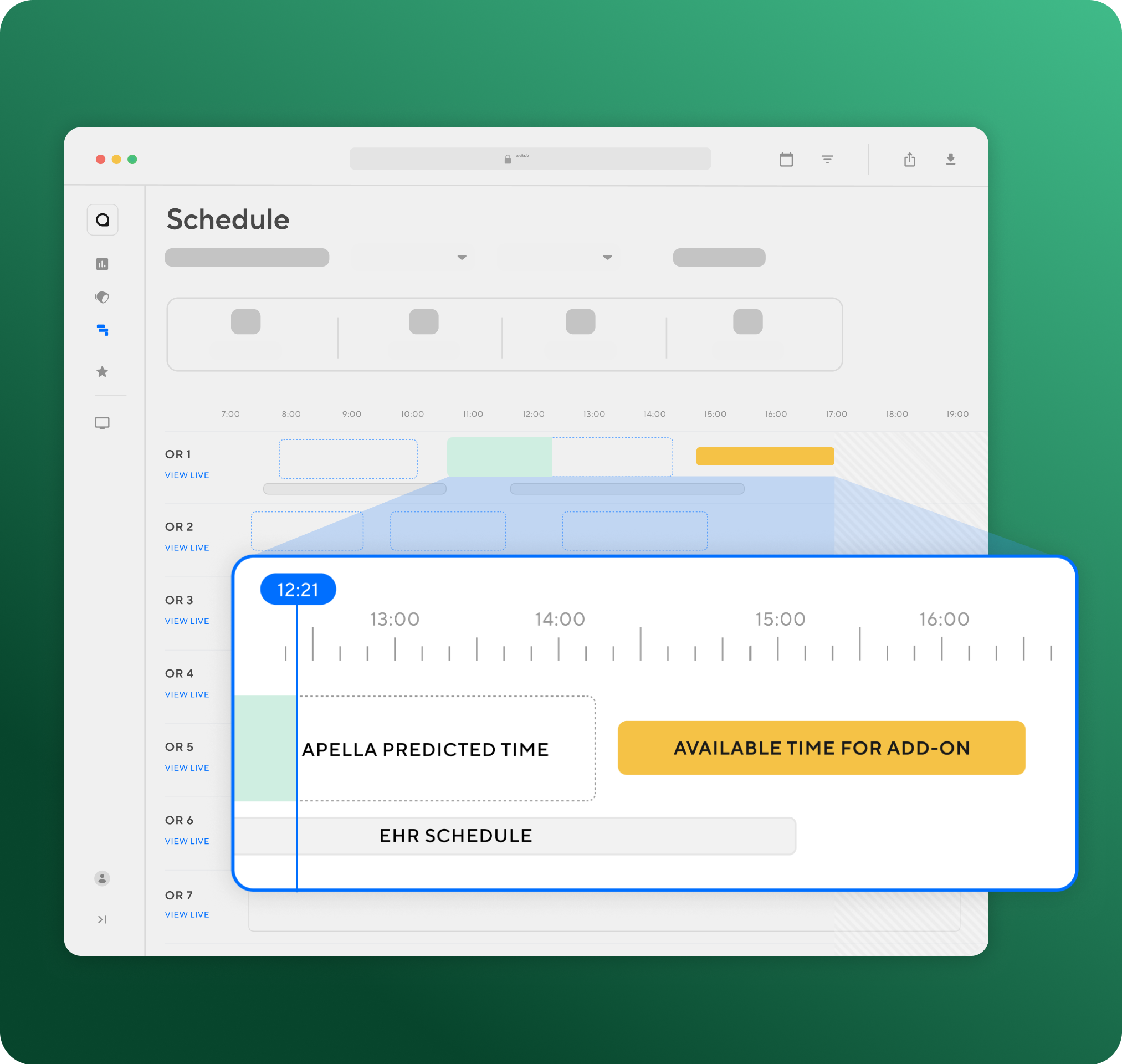
See which rooms are likely to run early or late before the day even begins. Apella’s forecasts help your team stay ahead and finish on time.
- Predicted vs. EHR schedule
- Continuously updated case and turnover forecasts
- Predictions for staffing updates and add-ons
Drive results with data you can trust

Apella’s data gave us confidence to open up additional rooms and support more cases without overwhelming our staff.
Rose McCullough
Perioperative Director at Houston Methodist
28%
LESS OVERTIME WITH APELLA
Frequently asked questions
Can ambient AI actually decrease late-ending OR days?
A study published in Perioperative Care and Operating Room Management evaluating Apella’s case duration scheduling accuracy across six hospitals in the Houston Methodist system. It found that Apella improved case duration accuracy by 40% and reduced late-ending OR days by 46 percentage points, with no reduction in case volume. As a result, even rescheduled cases were closer to actual durations 72% of the time. Another pilot study found that Houston Methodist reduced overtime by an average of 28% across ORs.
Does automating OR documentation actually save staff time?
Yes. By auto-detecting and logging up to 14 case events, with the ability to write data directly to the EHR, Apella removes a substantial share of the manual documentation that perioperative staff would otherwise do during and between cases. By automating coordination tasks — room status checks, one-off communication with surgeons, and coordination with pre-op and PACU — Apella frees time for OR nurses for direct patient care and ending shifts on time.
How much can hospitals actually reduce turnover times with Apella?
Results vary by site and case mix, but hospitals have used Apella's data to cut long turnover times by double digits. One study documented a 16% turnover time reduction that unlocked an estimated 18 additional cases per OR per year. The gains typically come from identifying and fixing specific bottlenecks — like a missed cleaning step, unclear staff hand-offs, or poor sequencing — rather than from a single blanket fix.
How accurate are Apella's case duration predictions?
Apella's predictions are built from a hospital's own historical case data — including surgeon-specific patterns and procedure type — rather than generic EHR scheduling estimates, which are often based on the time a surgeon originally requested rather than actual performance. Health system partners have reported measurable gains in scheduling accuracy after adopting Apella's live and predictive data over EHR-only scheduling. Hospitals have found Apella to improve case duration accuracy by 40% and schedule forecasts by 24% compared to the EHR.